
What the FBI’s 2025 IC3 Report Means for Everyday People of Southwest Louisiana?
““Behind every scam loss is a real person, a real family, and money that was earned the hard way.””
Folks in Southwest Louisiana work hard for what they have.
That may be a paycheck from the plant, overtime money, retirement savings, a tax refund, a side business, or money set aside for your kids and grandkids. However it is earned, it usually comes with long hours, real effort, and little room for error.
That is what makes scams so dangerous. They are not just annoying. They are draining bank accounts, retirement funds, business accounts, and peace of mind.
According to the FBI’s 2025 Internet Crime Report, the Internet Crime Complaint Center received 1,008,597 complaints in 2025, with reported losses reaching $20.877 billion. Investment fraud caused the greatest losses nationwide, followed by business email compromise and tech support scams.
Read the full FBI report here:2025 IC3 Report
Why This Matters in Louisiana
For Louisiana, the numbers hit closer to home.
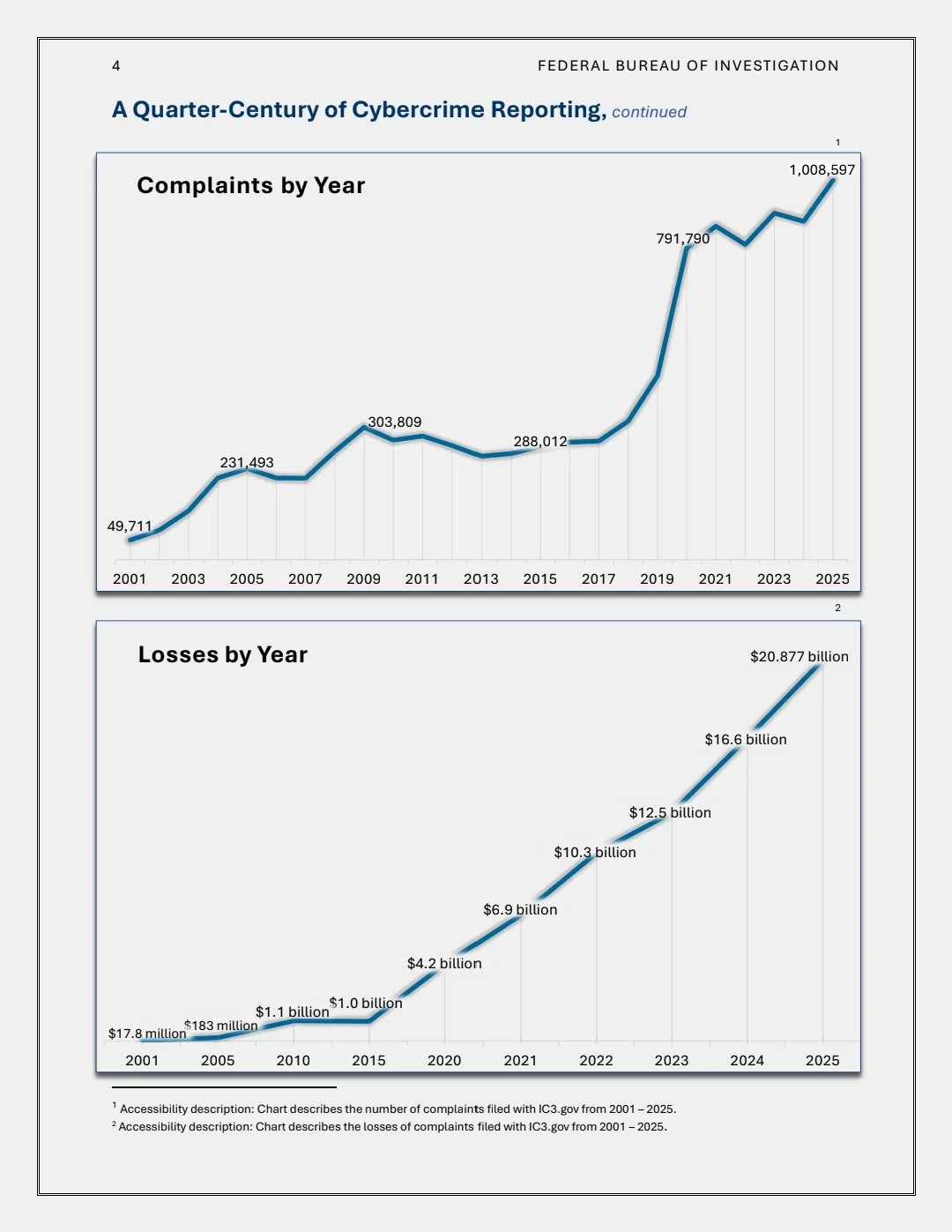
Complaints & Losses by the Year. -FBI Annual Report 2025
The report shows:
8,623 complaints from Louisiana
More than $105.4 million in reported losses
That includes people right here in places like:
Lake Charles
Sulphur
Westlake
Moss Bluff
Carlyss
Iowa
Vinton
Jennings
DeRidder
And the smaller communities that often get overlooked in national conversations
Scam losses do not just land in big cities. They hit regular working people, retirees, widows, small business owners, church members, and families trying to keep their heads above water.
Scams Do Not Look Like They Used To
A lot of people still picture scams as obvious junk messages full of broken grammar and wild promises.
That old version still exists, but the game has changed.
The criminals behind these schemes are getting better at:
Sounding professional
Looking legitimate
Building trust
Taking their time
Moving in when the timing feels right
Some do not rush in asking for money on day one. They work the angle, gain confidence, and then make the hit.
Investment Fraud Is Wrecking People Financially
That is one reason investment fraud caused so much damage.
According to the FBI report, investment scams led all categories in losses, totaling more than $8.6 billion nationwide.
People are being pitched fake opportunities that look polished and convincing. Some involve cryptocurrency. Some involve supposed insiders, trading groups, or financial experts. Some start through text messages, social media, dating apps, or casual conversation.
By the time the victim realizes what happened, the money is often long gone.
Crypto Is a Major Part of the Problem
The report also shows that cryptocurrency remains a major driver of losses.
Complaints involving cryptocurrency were tied to more than $11.36 billion in losses nationwide
Louisiana alone had 1,366 cryptocurrency-related complaints
Louisiana reported more than $53.6 million in crypto losses
That matters in Southwest Louisiana because working families here are often targeted with pitches built around:
Making extra money
Investing smarter
Getting ahead faster
When prices are up, bills are tight, and people are trying to stretch every dollar, a scam dressed up like opportunity can catch good people off guard.
Older Adults Are Taking Some of the Hardest Hits
Older adults are getting hammered.
The report shows people age 60 and older filed:
201,266 complaints nationwide
$7.748 billion in losses
More than 12,000 people in that age group lost over $100,000
That should matter to every family in this region.
In Southwest Louisiana, many people are looking out for:
Parents
Grandparents
Older neighbors
Church members
A scam against one older adult can affect the whole family. It can wipe out savings that took decades to build. It can create stress, shame, and fear that victims often carry quietly.
The highest-loss categories for older adults included:
Investment fraud
Tech support scams
Romance scams
Business email compromise
Government impersonation
That means a scammer may sound like a company employee, a government office, tech support, an online love interest, or someone offering help. The method changes. The goal stays the same.
AI Is Making Scams More Believable
Another major issue in the 2025 report is artificial intelligence.
The FBI recorded:
22,364 complaints that referenced AI
More than $893 million in adjusted losses
The report points to AI being used in:
Fake profiles
Polished scam messaging
Voice cloning
More convincing fraud attempts
That means the scammer on the other end may sound smoother, smarter, and more believable than before.
A fake emergency call can sound like a loved one. A fake investment pitch can look more professional. A fake business message can read like it came from someone who knows exactly what they are talking about.
That shift matters for blue-collar communities because people here tend to trust what sounds practical, direct, and real. Scammers study that. They know how to mirror authority. They know how to sound local enough, official enough, or helpful enough to keep people engaged.
Phishing and Spoofing Are Still Everywhere
The report also shows that phishing and spoofing led all complaint categories by count, with 191,561 complaints nationwide.
That covers the stuff many people are already seeing:
Unpaid toll messages
Package delivery issues
Bank fraud alerts
Fake account notices
Utility shutoff warnings
Fake websites
Spoofed phone numbers
All of it is designed to get a person to click first and think second.
What People in Southwest Louisiana Should Do
For people in Southwest Louisiana, scam prevention has to be practical.
It has to sound like something you can actually use.
Basic rules that still work
Slow down when money is involved
Do not trust urgency
Do not trust caller ID by itself
Do not move money because someone on the phone tells you to
Do not click links in random texts
Do not assume a polished message is a legitimate message
Verify through a known phone number or official website
That advice may sound simple, but it matters because most scams succeed by creating pressure. The victim feels rushed, embarrassed, scared, excited, or distracted. Good judgment gets crowded out.
Speed Matters After Fraud Happens
One of the strongest points in the FBI report is how important fast reporting is after fraud happens.
The FBI’s Recovery Asset Team handled 3,900 incidents in 2025 involving more than $1.16 billion in attempted theft and froze about $679 million.
That means time matters.
If money was sent, do this immediately
Call your bank or financial institution
Report the fraud
Save screenshots, phone numbers, emails, receipts, and messages
File a report with IC3
If you need assistance reporting, give SAFE Net a call!
Why SAFE Net Exists
For Southwest Louisiana, education is one of the best defenses. People need more than generic warnings. They need current information, local conversations, and plain guidance that makes sense in everyday life.
That is why SAFE Net exists.
We work to educate the public about scams, fraud, and digital threats affecting communities across Southwest Louisiana. That includes Lake Charles, Sulphur, Westlake, and the surrounding region.
Our goal is to help people:
Spot red flags earlier
Protect their money and information
Know what to do when something goes wrong
Final Thought
The FBI report lays it out clearly.
The losses are massive
The tactics are evolving
The people being targeted are regular Americans who worked for their money and never expected to get pulled into a scam
That includes people right here at home.
